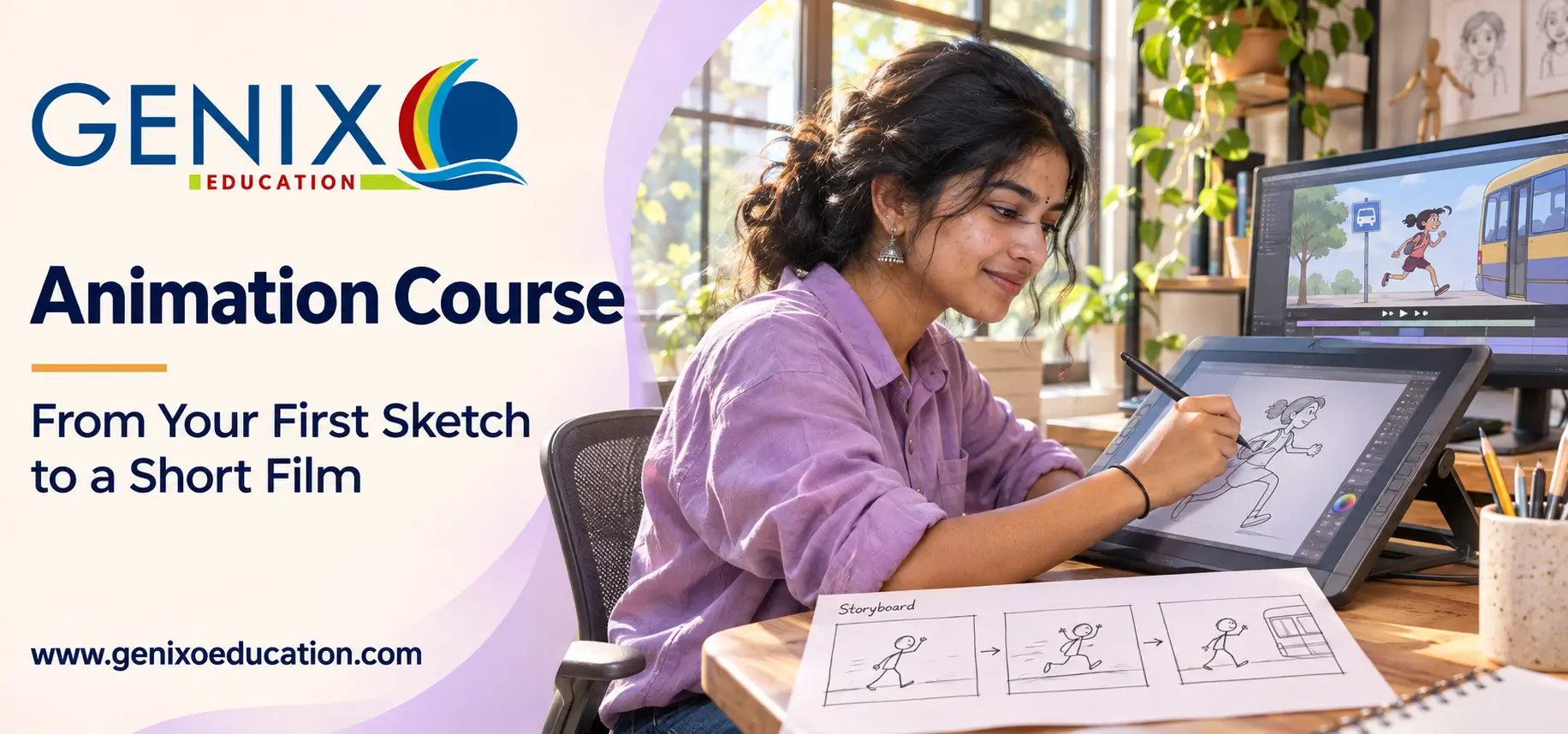
Imagine a short scene: a girl runs towards a bus, drops her notebook and stops to pick it up. There is no dialogue, but you understand what happened.
Creating those few seconds involves several decisions. How fast should she run? When should the notebook fall? How will her expression change when the bus leaves?
An animation course teaches students how to make these choices and turn them into moving images. For someone considering this field, understanding the work behind a scene is more useful than looking at software names alone.
What does an animation course teach?
Animation combines observation, drawing, storytelling and technical practice. Depending on the programme, students may work with hand-drawn images, digital characters, physical objects or a combination of methods.
Some programmes bring together traditional drawing, digital techniques and original filmmaking. Others place greater emphasis on specific production skills. Check the actual syllabus before applying.
You may encounter BSc Animation, BDes Animation Film Design, diploma programmes and other qualifications. Similar names do not necessarily mean similar training.
How does an idea become an animated scene?
Let’s return to the girl missing her bus. Here is an illustrative project showing how different skills fit together.
First, plan the story.
Decide what the audience needs to see. The scene might begin with the girl noticing the bus and end with her watching it leave. Adding too many events could make a short scene difficult to follow.
Next, draw a storyboard.
A storyboard is a sequence of rough pictures showing the planned shots. You could draw the approaching bus, the falling notebook and the girl’s reaction. Simple drawings can help you judge whether the sequence makes sense.
Then, develop the character and movement.
Think about posture, expression and timing. A relaxed walk looks different from a hurried run. Small changes in movement can help the audience understand what a character feels.
Finally, assemble and review the scene.
Watch whether the action is clear. Does the notebook fall too quickly to notice? Is the final reaction held long enough? Sound and editing can then help complete the scene.
Depending on the syllabus, students may also learn modelling, lighting and compositing. Modelling involves building digital objects or characters. Compositing brings separate visual elements together in a shot.
What about an animation and VFX course?
Animation creates movement through a sequence of images. Visual effects, usually called VFX, can involve creating or combining visual elements within a shot.
For a simple example, animating a bird’s flight involves designing its movement. Adding that computer-created bird to footage of a real street also requires the elements to fit together convincingly.
A combined animation and VFX course may introduce both areas. Read the semester details to understand how much teaching and practical work each area receives.
What should you check before admission?
If you are exploring animation courses after 12th, confirm the qualification accepted, minimum marks, selection process and programme duration on the institution’s current admission page.
Then ask to see student work. A finished film is helpful, but rough sketches, early versions and corrected scenes can tell you more about how students learn.
Useful questions include:
- How often do students receive individual feedback?
- Which assignments must each student complete independently?
- Can students use the computer lab outside class hours?
- How are individual contributions assessed in group projects?
Parents can also ask who awards the qualification and request the admission and refund terms in writing.
How should you compare animation course fees?
Ask for the complete cost rather than comparing only the advertised tuition fee. Check whether software access, examinations, equipment, printing and other compulsory expenses are included.
Also ask whether students need their own computer and what specifications the course requires. Confirm this before buying one.
Compare the cost alongside teaching hours, access to facilities and feedback on assignments. A long software list does not explain how much guided practice a student receives.
Is animation the right course for you?
Try a small exercise before deciding. Draw a bouncing ball in several positions or photograph a paper character moving across a desk. Play the images in sequence and adjust the movement.
Notice whether you enjoy making corrections as much as seeing the finished result.
When exploring design courses in Bangalore, check whether the college actually offers your preferred animation specialisation. Ask to see its syllabus and student projects before making a shortlist.