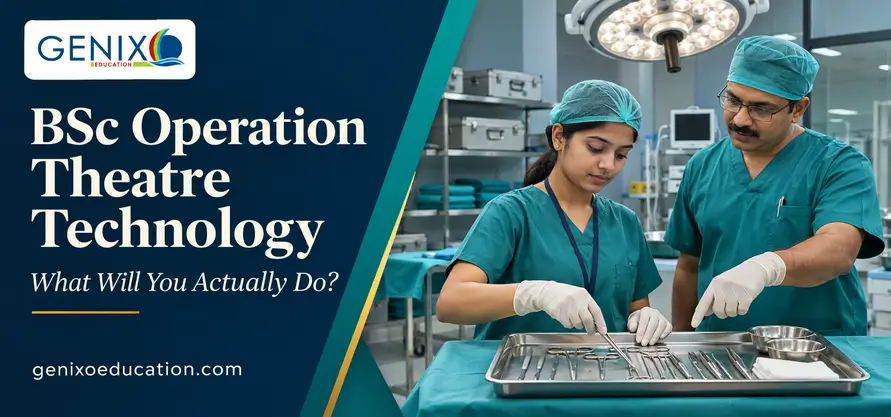
An operation theatre needs preparation long before surgery begins. Equipment must be ready, instruments organised and safety procedures followed. Students considering this field often have a simple question: what part of that work would I learn to do?
BSc Operation Theatre Technology prepares students for technical support work within a surgical team. Often shortened to BSc OTT, the course combines classroom study with practical training. Understanding the everyday responsibilities can help you decide whether the subject interests you beyond its name.
Before surgery: getting the theatre ready
Preparation is a substantial part of operation theatre technology. Students learn about surgical instruments, equipment and the routines used to prepare an operating room.
Imagine arriving for a practical session and seeing a tray of unfamiliar instruments. Learning their names is a start. You also need to understand their purpose, how they are handled and why their arrangement matters to the team.
University curricula include areas such as equipment management and OT tray setup. During clinical training, the tasks a student can perform depend on their assessed skills and the supervisor’s instructions.
If you visit a college, ask to see how students practise these preparations. A demonstration room is useful, but ask how that practice connects with hospital postings.
During surgery: supporting the team
The work involves following instructions, handling equipment within your responsibilities and communicating clearly with colleagues. What you do will depend on your training, the procedure and the hospital’s rules.
Some programmes combine operation theatre and anaesthesia technology. Their training may include supporting an anaesthetist, the doctor responsible for anaesthesia, with equipment preparation and related technical tasks.
That distinction matters. Studying anaesthesia technology does not qualify someone to make independent medical decisions or administer anaesthesia independently. Ask the college to explain exactly which supervised skills its programme teaches.
For a student, a useful question is: would I enjoy careful preparation and teamwork even when the work is repetitive? The role calls for consistency, not just interest in watching operations.
After surgery: preparing for the next case
The work continues when a procedure finishes. Depending on the assigned role, responsibilities can include handling used equipment, following waste disposal procedures and helping prepare the theatre for its next use.
Course brochures may mention CSSD, the Central Sterile Supply Department. This department processes and supplies sterile instruments and materials. Learning about its procedures helps explain how instrument preparation connects with infection prevention.
When comparing training arrangements, ask whether students learn these routines as part of their postings. A course should help them understand the preparation and follow-up around a procedure, as well as what happens during it.
What will you study first?
Students build a foundation in anatomy, physiology, microbiology and other sciences before applying that knowledge to theatre work. Anatomy covers body structures; physiology explains how the body works. Microbiology introduces microorganisms and their relevance to infection.
These subjects give meaning to practical instructions. You are learning why a routine matters, rather than simply remembering a sequence.
Check the university’s actual syllabus. BSc Operation Theatre Technology and a combined Anaesthesia and Operation Theatre Technology degree should not be assumed to have identical content.
What should students and parents check before admission?
Start with the current admission notice. Confirm the required Class 12 subjects, marks, selection process and total course duration, including internship. Do not assume a duration quoted online includes every training requirement.
For example, Father Muller lists its combined Anaesthesia and Operation Theatre Technology programme as four years, including a one-year internship. This is a specific programme’s structure, not a rule for every college.
Before paying, request clear answers to four questions:
-
Which hospital provides the clinical training?
-
Who supervises students and checks their practical skills?
-
Is the internship arranged by the institution, and are there additional charges?
-
What is the full fee, including examinations and compulsory training expenses?
When exploring BSc Operation Theatre Technology colleges in Bangalore, use those answers to compare your options. Keep the syllabus, hospital training details and written fee breakdown together so your family can assess the same information.