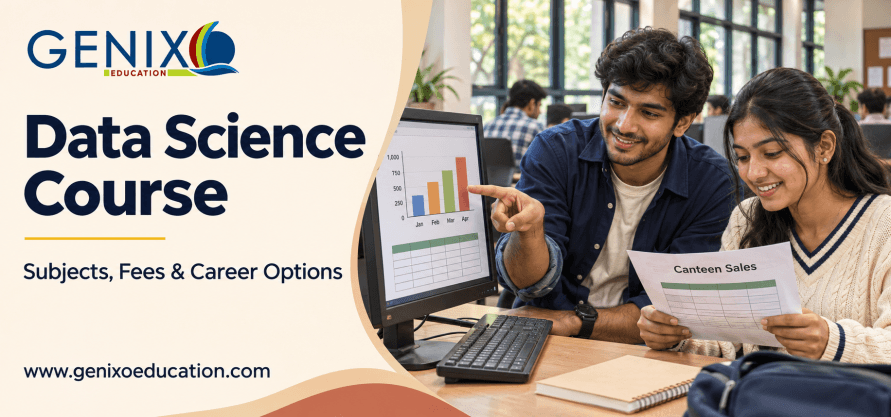
A college canteen prepares 200 lunches every day. By the end of the afternoon, some food is left over. On other days, lunch sells out before everyone has eaten.
How many meals should the canteen prepare tomorrow?
To answer that, you could look at previous sales, attendance, holidays and the menu. A data science course teaches you how to work with information like this, check it carefully and use it to make better decisions.
If you are thinking about studying the subject, here is what you should know before choosing a college.
What do you learn in a data science course?
You learn how to turn a collection of records into something people can understand and use.
Those records could be a shop’s bills, bus arrival times or answers from a student survey. You learn to check for mistakes, organise the information and work out what it tells you.
For example, a shop’s sales may have increased after a discount. But did the shop earn more money, or did it sell more products at a smaller profit? The answer needs more than a quick look at the sales total.
This is where calculations, computer skills and careful questioning come together.
What subjects will you study?
The subjects differ between colleges, but you may come across the following areas.
Mathematics and statistics
You work with numbers, averages, graphs and probability. Probability means studying how likely something is to happen. Degree courses may also include more advanced maths, so read the syllabus before applying.
Programming
Programming means writing instructions for a computer. You might use it to calculate thousands of bills or find missing entries in a large file. Python is one programming language taught in data science programmes.
Databases
A database stores information in an organised way. You learn how to find the records you need—for example, all the purchases made during a particular month.
Charts and reports
You learn to explain your findings clearly. A useful chart should help someone understand the answer without having to read every row of a spreadsheet.
Some programmes also teach machine learning, where computers use patterns in existing information to make predictions.
What would you do in a practical assignment?
Let’s return to the college canteen.
Your teacher might give you a month of lunch records and ask you to suggest how many meals to prepare.
First, you check the records. Are any dates missing? Has someone entered 2,000 meals instead of 200? Was the canteen closed on a particular day?
Next, you compare the days. Perhaps fewer lunches sold during exams because students went home early.
You would then explain what you found and what you still need to check. One month of records may not be enough to make the same recommendation for the whole year.
An assignment like this involves checking, calculating and explaining—not just using a computer.
Who can apply for a data science course?
Data science course eligibility depends on the programme.
For BSc Data Science and other undergraduate degrees, check the required Class 12 subjects, minimum marks and admission process. Some programmes require Mathematics or a particular subject combination.
Do not assume that one college’s rules apply everywhere. A degree, diploma and short certificate may accept different qualifications.
If you have not studied Maths in Class 12, ask the college whether your subjects meet its requirements. Get a clear answer before paying.
Also confirm the course duration, whether classes are online or on campus, and which university awards the qualification.
What should you check about the fees?
Ask for the total cost of completing the programme. A fee shown on an advertisement may cover only one semester or exclude other charges.
Request details of tuition, examinations and any compulsory additional payments. If you need accommodation or a computer, include those costs in your budget.
Parents should also ask:
- Can the fees change during the course?
- Are instalments available?
- What happens if the student withdraws?
- Which charges are refundable?
Compare what each college provides, including practical classes, help with assignments and access to computers.
What work can you explore after studying?
Depending on your qualification and skills, you may explore work involving data analysis, business reports or similar tasks. Specialised roles can need further study or experience.
Read job descriptions carefully. Two employers may use the same title but expect different work.
Ask colleges about the actual roles offered to recent graduates. A promise of placement support is not a guaranteed job.
How do you know whether this subject suits you?
Try a small task first. Make a spreadsheet of fictional canteen sales, calculate the daily average and draw a chart. Then write a few sentences explaining what you noticed.
Did you enjoy finding the answer and checking your calculations?
When reviewing science courses in Bangalore, use that experience to ask better questions about data science programmes. Request the syllabus and examples of student assignments before deciding.